Business Knowledge Base vs Second Brain: Fix the Gap
Business knowledge base vs second brain: learn why agency teams need shared, current context instead of knowledge trapped in the owner's head.
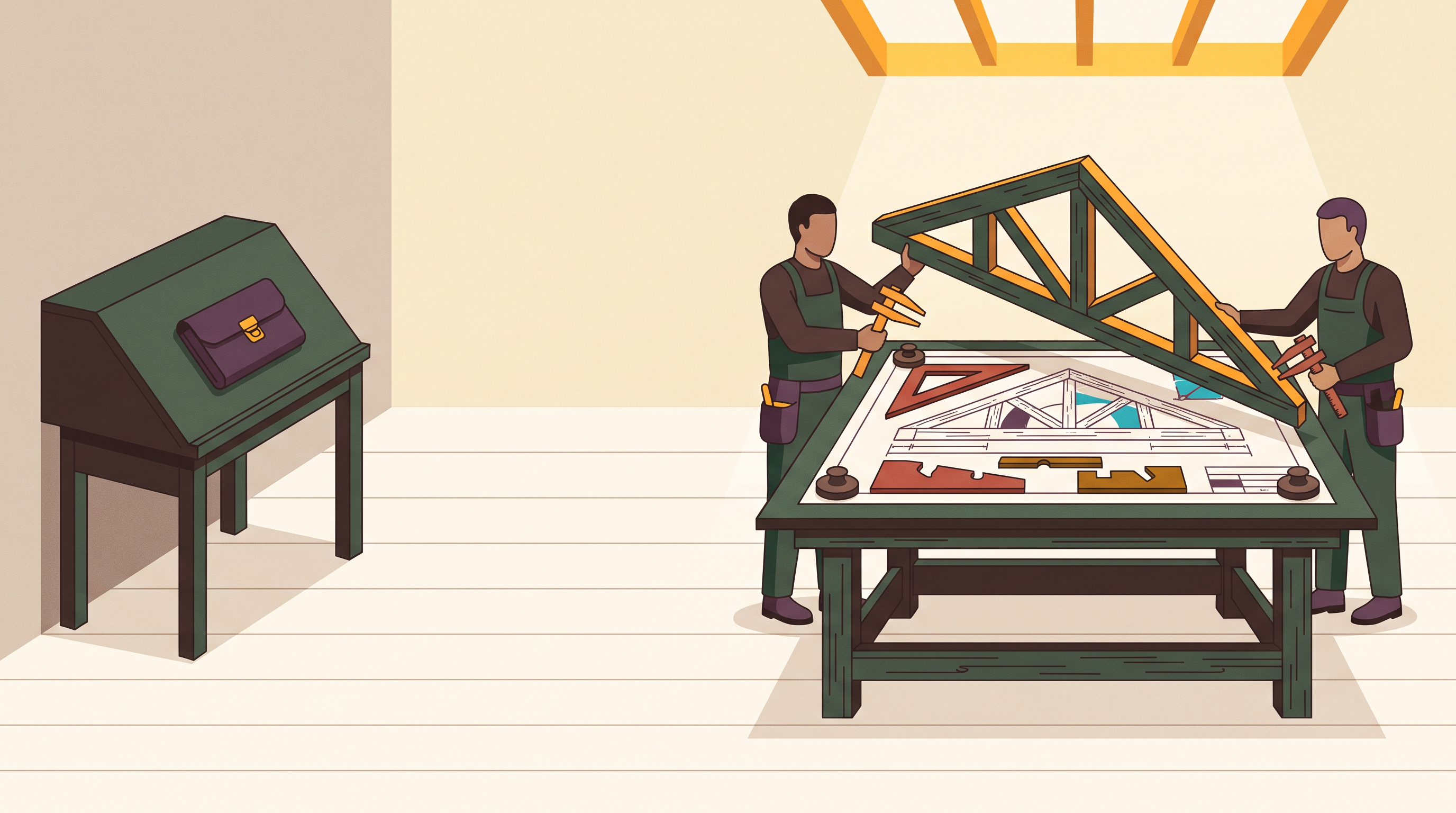
If you are the only one who knows where everything is, that is a systems problem
Someone on your team asks where the client brief is. You know. Someone else needs access to the project tool. You know. A new contractor wants to understand why the team chose an approach six months ago. You know, because you were in the room.
The problem is not your memory. The problem is that the business has no shared memory. Operational context lives in your head, or in documents only you can find. The moment you are unavailable, the team slows down or stops.
A personal second brain and a shared business knowledge base sound similar, but they serve different purposes. A second brain supports one person. A business knowledge base gives the team context it can trust. Knowing which one you have is the first step to removing yourself as the single point of failure.
What a second brain is, and why it was never meant for a team
Tiago Forte’s Building a Second Brain is a personal knowledge-management system. It helps one person capture what matters, organise it for their own work, and return to it when needed.
That personal fit is the point. You remember why you saved a note, where it roughly lives, and what it was meant to inform. The system fits one mind.
When an agency owner tries to share that system, the team receives a private archive. The folders make sense to the person who made them. The surrounding context does not travel as easily: why a note was saved, what decision it informed, and what changed afterward.
A second brain handed to a team is not a team system. It is a personal system with extra readers. Those readers will find it incomplete or hard to trust because it was never designed to answer their questions.
What a business knowledge base is
A business knowledge base is more than a tidier folder structure. It is shared memory the organisation owns, built so a team member can find the context they need without asking the person who was in the room.
Three properties separate it from a personal archive:
- The organisation owns it. When someone leaves, the knowledge stays.
- It preserves source context. A useful decision record includes the decision, its reasoning, its date, the alternatives considered, and the conditions that were true at the time.
- It serves people who were not present. It uses shared language, clear access rules, and sources people can check.
Spinach AI’s comparison of second brains, company brains, and knowledge bases makes the distinction useful: a personal second brain serves one person’s context, while a knowledge system for a company must make reusable information available to the people authorised to use it.
For a team of two to ten people, this has an immediate effect. A client calls about a decision made three months ago. The person who handled the project is on leave. With a shared source of truth, another person can answer from the decision record and its sources. With a personal second brain, the owner gets a call on their day off.
The line between them: ownership and what leaves when someone does
Ask one question: what happens to this knowledge if the person who created it is no longer available?
With a personal second brain, the files may remain, but much of their value can disappear. The priorities, shortcuts, and reasoning behind them lived with the person who built the system.
Vectorize’s explanation of the brain stack makes the ownership distinction explicit. A company brain is shared organisational memory. It needs a common source of truth, a way to stay current, and access controls that do not depend on one person explaining every result.
For an agency owner, this is not abstract. If you were unavailable for two weeks, which parts of the team’s work would slow down or stop? Those parts are running on your personal memory. That is a business risk that grows with the team.
Why most agency knowledge systems quietly stop working
Most agencies have documentation: a shared drive, a Notion workspace, or a folder of SOPs. The problem is not that the documents do not exist. It is that they go out of date, and no one is sure which version is current.
Spinach AI identifies the structural reason: a knowledge base begins degrading when the next meeting changes a decision and nobody updates the document. The new reasoning stays in the room while the old document remains available.
This is not only a discipline problem. It is a design problem. A system that depends on someone manually updating a document after every relevant decision will lag behind reality. The people closest to the work are usually the busiest, and the update is easy to defer.
The result is a knowledge system that looks complete but cannot be trusted. Team members check it once, find an old answer, and stop checking. Context returns to the person who was in the room. The owner becomes the single point of failure again.
What changes when the team has a shared source of truth
When business memory works as designed, a few things change.
Questions stop routing to the owner. A team member can answer a client’s question about a past decision by checking the record and its source context instead of waiting for the owner to reply.
Onboarding stops depending on weeks of conversations with the owner. The context a new person needs, who the clients are, what matters to each of them, and which approaches have already been tried, is available in the system.
Meta’s September 2026 engineering account of an organisational second brain describes the same underlying challenge in a much larger setting: valuable expert knowledge often stays in people’s heads. Their approach uses structured, auditable knowledge and expert feedback to turn one-off corrections into lasting institutional memory.
The human decision-maker does not disappear. Judgment, relationships, and final approval remain with people. The difference is that the team no longer starts from zero whenever the owner steps away.
The decision in front of you
You can continue as the single point of failure. That limits the team’s capacity to your availability, leaves clients dependent on your personal memory, and makes growth harder than it needs to be.
Or you can build a shared knowledge system the team owns: one where decisions include their reasoning, source context is preserved, and the knowledge lives in the organisation rather than in one person.
The starting point is not a software decision. It is a clarity decision. Name the parts of the business that run on your personal memory and the cost when you are absent. The gap is usually visible within minutes.
A June 2026 comparison of AI knowledge-base tools shows that teams now have options at several price points. Choose a tool only after you know what the team must be able to find, who can see it, how it stays current, and who owns its accuracy.
Map your workflow
If your team keeps coming back to you for client context, decisions, or the next step, start with the workflow that creates the most interruptions. We can map how the context moves today, what should become shared memory, and whether custom software is the right answer.
Book a Map your workflow call.
Sources and further reading
- Spinach AI, “Knowledge Base vs Company Brain”
- Vectorize, “The Brain Stack: Second, Company, and Single Brain Explained”
- Tiago Forte, Building a Second Brain
- Brewster Consulting, “Best AI Knowledge Base Software (2026)”
- Engineering at Meta, “An Organizational Second Brain: Building an AI That Learns From Experts”
What is your team carrying that a system should?
Map one workflow that keeps getting missed, rebuilt, or stuck in someone’s head.
Map your workflow