Leads wait
Follow-up depends on a busy person remembering the next step.
Operational software for owner-led service businesses
In 30–45 days, ZenRocket maps and builds one costly, repeated workflow—so context, ownership, and the next action are clear while people keep judgment and approval.
Map the workflow costing your team mostThe condition we change
A good business can outgrow the systems that carry its context and work. People compensate through memory, messages, spreadsheets, and repeated coordination until a lead waits, a handoff slips, or the owner becomes the escalation path.
Follow-up depends on a busy person remembering the next step.
Client context, commitments, and work status live in different places.
The right answer exists, but only someone who was in the room can find it.
Everyone is working, but no one can see who owns the next action.
Choose the work to change first
01 · Lead flow
Capture, route, qualify, and prepare follow-up while the team is busy.
02 · Client delivery
Connect project context, handoffs, commitments, and next actions for the people responsible.
03 · Knowledge
Create source-backed business memory with appropriate access boundaries.
04 · Operating foundations
Make the workflow, approvals, records, and reporting fit how the company actually runs.
See it in action
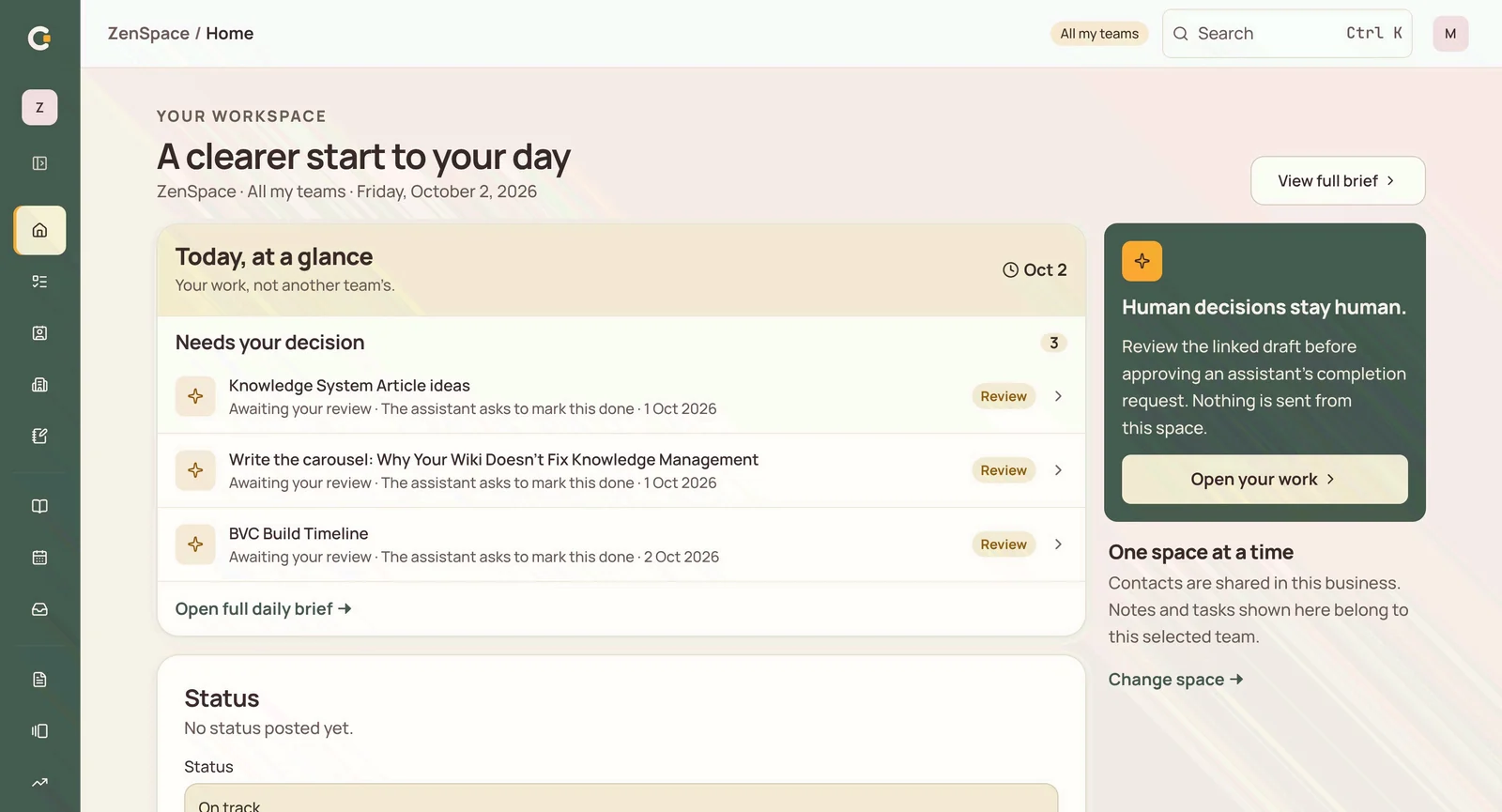
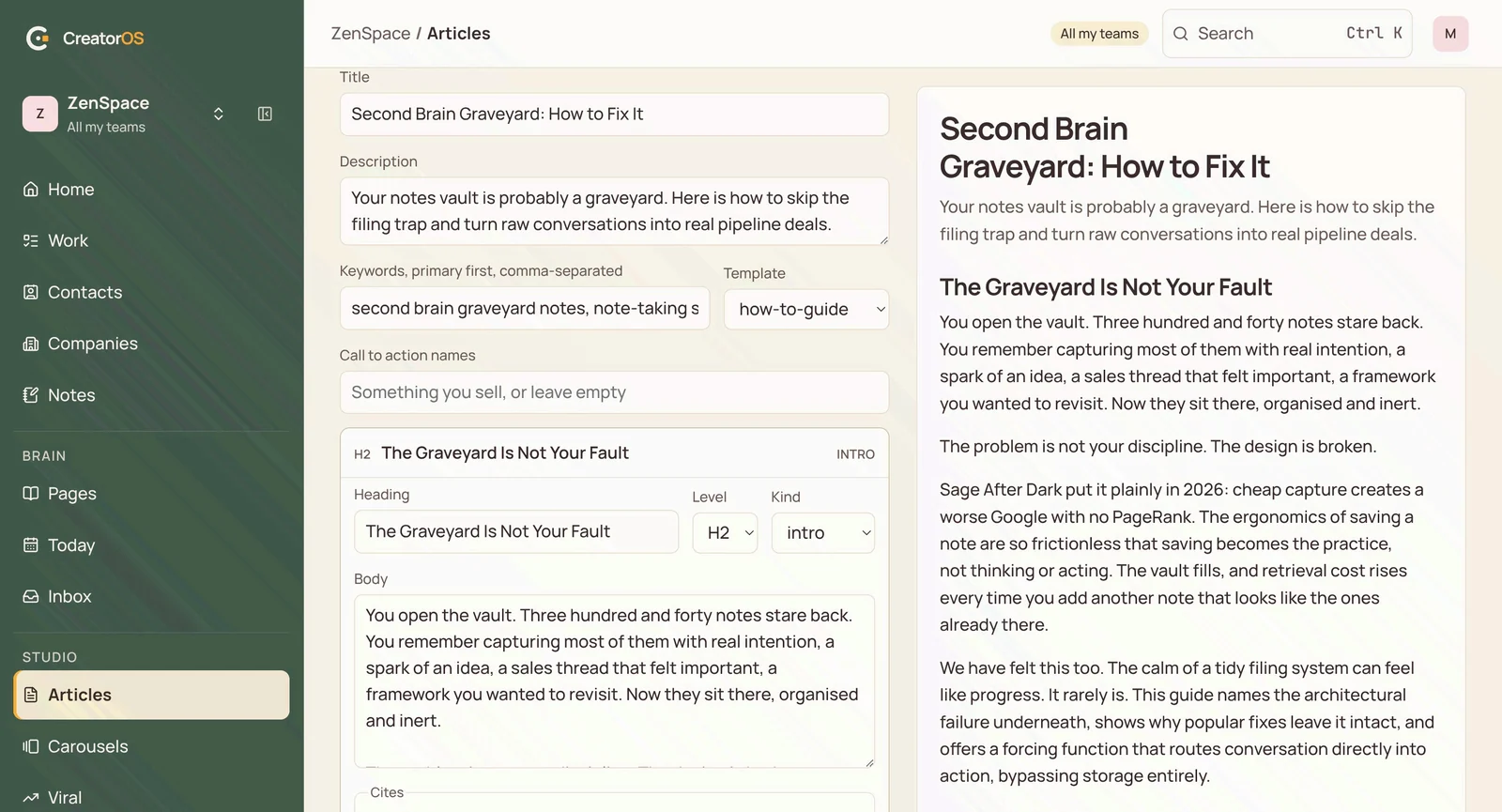
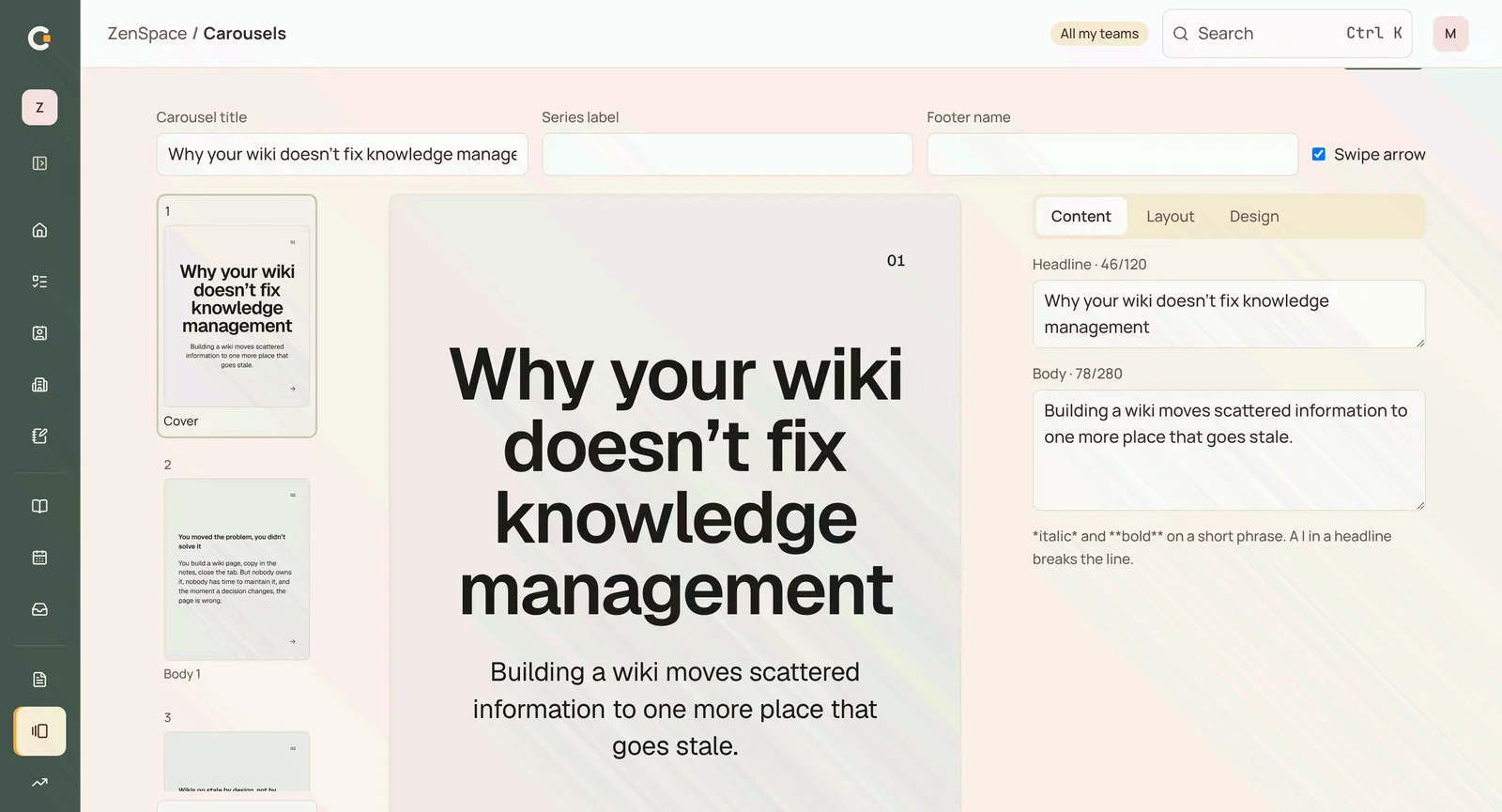
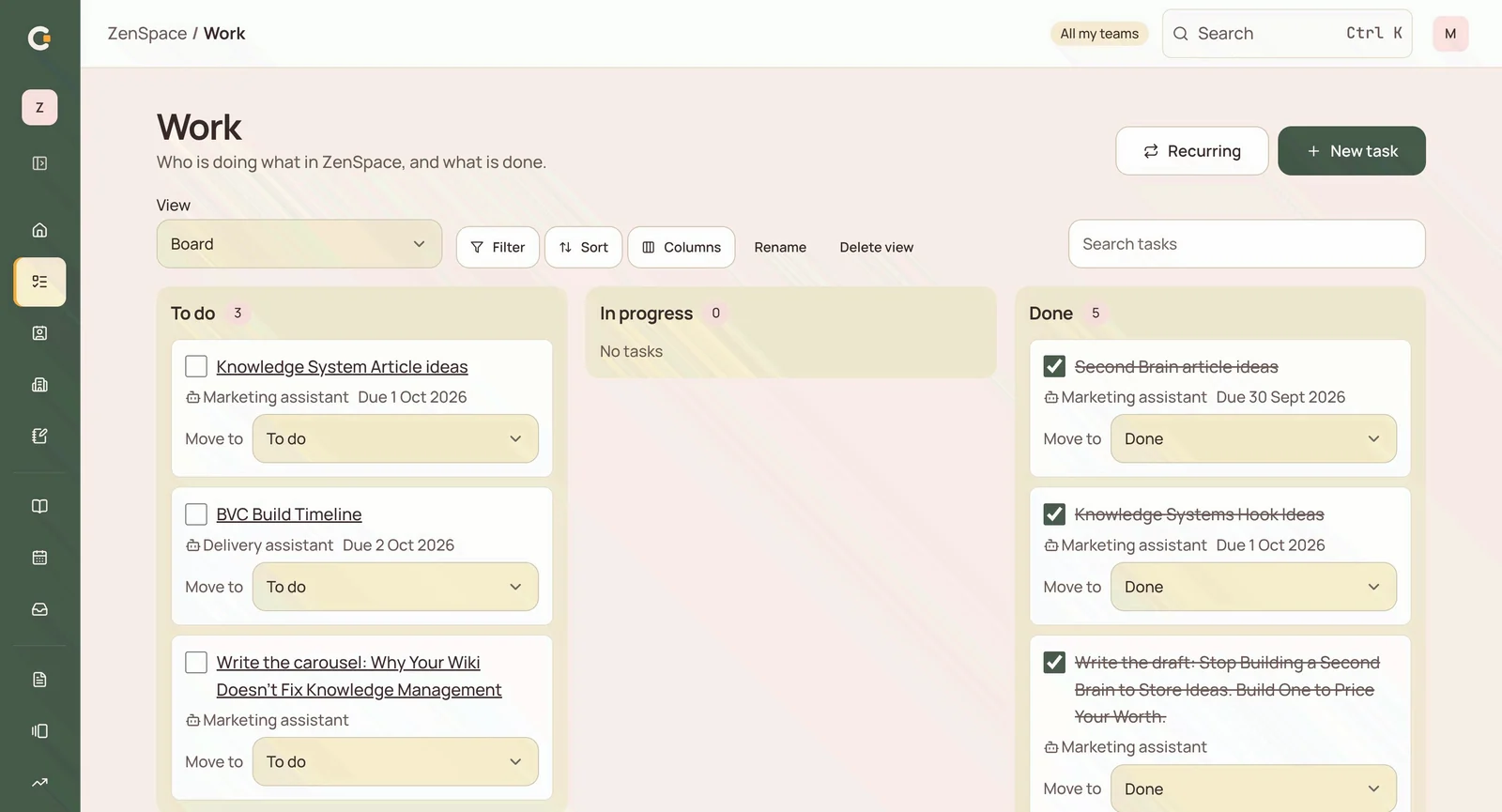
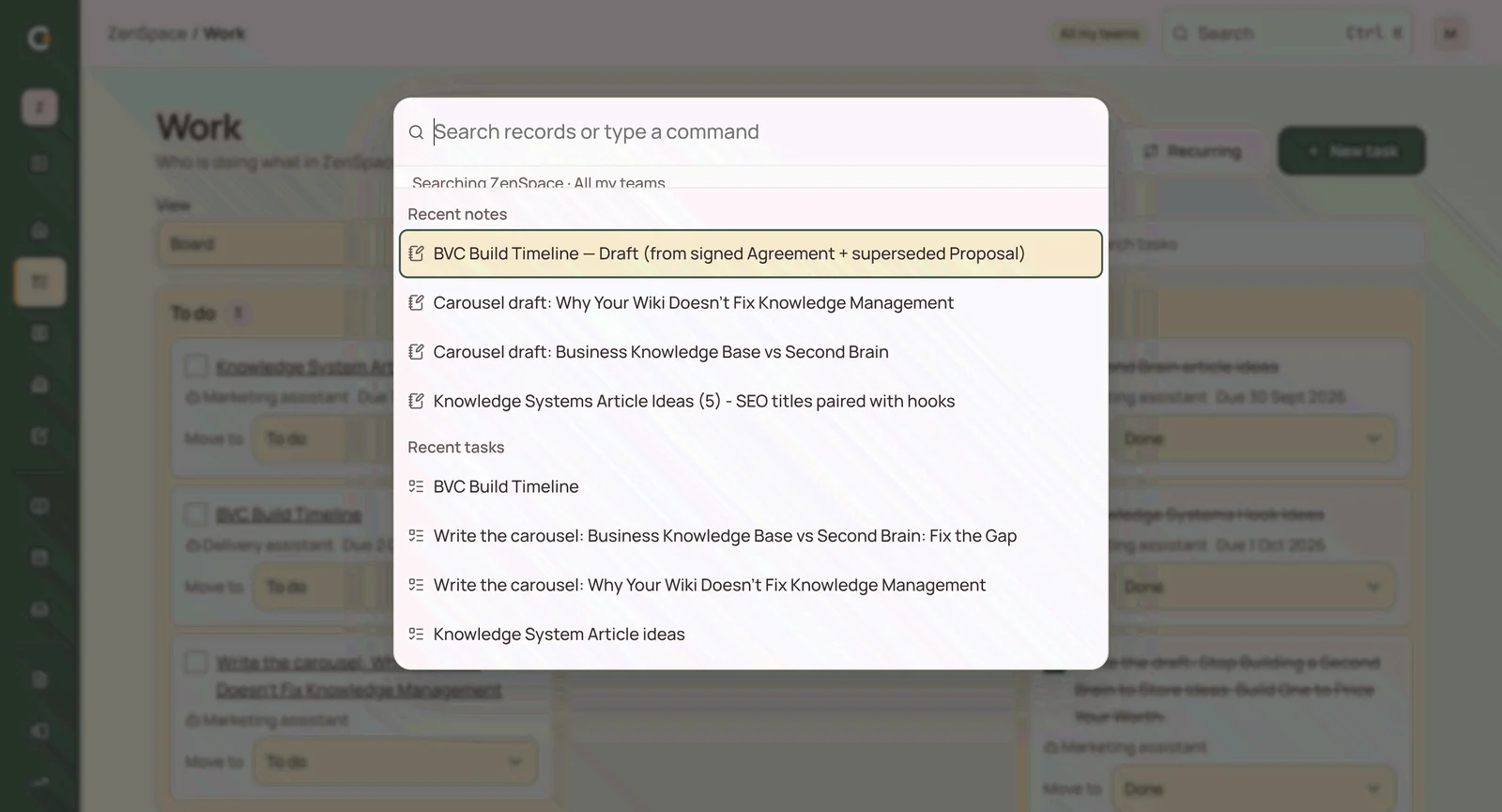
See how daily decisions, work ownership, content production, and search can live in one system—with people retaining the final say.
Product proof
These are screens from a custom operational workspace: one place for daily decisions, content production, assigned work, and source-backed search.
How the first build works
Days 1–7
Trace how work moves now, where context is lost, what it costs, and where a person must stay in control.
Days 8–30
Connect the agreed records, make ownership visible, and put the system into the real workflow.
Days 31–45
Use what real work exposes to fix the system, document its boundaries, and agree how it is maintained.
Build versus buy
If an off-the-shelf product solves the workflow cleanly, ZenRocket will say so. A bespoke build is justified when the cost of disconnected context, workarounds, ownership gaps, or missing approval boundaries persists.
Bring the part of the work that keeps getting missed, rebuilt, or stuck in someone’s head. We will work out whether a system is the right answer.
Map your workflow